
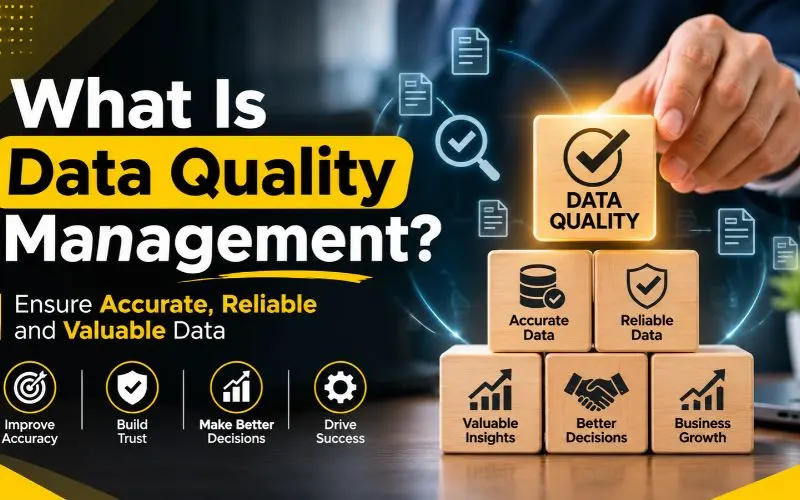
Data quality management, or DQM, is a set of processes, roles, and tools. Together, they keep your data fit for its purpose.
Think of it like a car service check. You inspect, fix small problems early, and avoid big breakdowns later. Data works the same way.
A strong DQM program covers the full data life cycle. It starts when data enters your systems. It continues through storage, integration, reporting, and retirement.
The goal is trust. When people trust the numbers,
Why Data Quality Matters for Your Business
Bad data costs real money. Gartner says poor data quality drains budgets and weakens decisions across the organization.
Here is what poor data quality can cause:
- Wrong reports and misleading dashboards
- Failed marketing campaigns and wasted ad spend
- Unhappy customers who get duplicate or incorrect messages
- Compliance risks and audit failures
- Slow projects because teams fix data by hand
Good data does the opposite. It supports data quality improvement, speeds up analytics, and gives AI models reliable inputs.
Understand the Data Quality Dimensions
Data quality dimensions are the standards you use to measure your data. They give your team a shared language.
Each dimension answers a different question. Together, they show the real health of your data.
Dimension | What It Means | Simple Example |
Data Accuracy | Values match the real world | A customer address is correct |
Data Consistency | Values match across systems | Same phone number in CRM and billing |
Data Completeness | Required fields are filled | No missing email addresses |
Data Integrity | Relationships between records stay intact | Every order links to a valid customer |
Data Standardization | Formats follow one rule | Dates always written as DD/MM/YYYY |
You can read more about these pillars in this IBM guide to data quality pillars.
10 Data Quality Management Best Practices
Use these steps to build a program that lasts. You do not need to do everything at once. Start small and grow.
1. Build a Data Governance Foundation
Data governance sets the rules for how your company handles data. It defines who owns data, who can change it, and how problems get solved.
Without governance, every team makes its own rules. That creates confusion and conflicting records.
Create a small governance council first. Include leaders from IT, operations, finance, and marketing.
2. Assign Data Stewardship Roles
Data stewardship puts a named person in charge of each data domain. Stewards watch quality, answer questions, and approve changes.
Good stewards know the business, not only the tools. They spot errors that software may miss.
Give stewards clear authority and time to do the job. A role on paper is not enough.
3. Create a Data Quality Framework
A data quality framework is your written plan. It lists your goals, standards, metrics, roles, and review steps.
Keep the framework short and practical. Teams should be able to follow it without training.
A solid framework usually includes:
- Business goals tied to data use
- Agreed data quality dimensions and targets
- Clear owners and escalation paths
- Tools, schedules, and reporting methods
4. Start With Data Profiling
Data profiling scans your datasets to show what they really contain. It finds nulls, duplicates, odd patterns, and out-of-range values.
Run profiling before you fix anything. It tells you where the biggest problems hide.
Profile your most important data first. Customer, product, and financial records are good starting points.
5. Define Data Validation Rules
Data validation rules stop bad data at the door. They check each entry against a set of conditions.
Common data validation checks include:
- Format checks, such as valid email or postal codes
- Range checks, such as ages between 0 and 120
- Required field checks for key values
- Uniqueness checks to block duplicates
- Reference checks against approved lists
Apply these rules in forms, APIs, and import jobs. Prevention is cheaper than repair.
6. Cleanse Data on a Regular Schedule
Data cleansing fixes or removes wrong, duplicate, and outdated records. It is not a one-time project.
Data decays fast. People move, change jobs, and switch phone numbers every year.
Automate cleansing where you can. Review tricky cases by hand, and always keep a backup before big changes.
7. Standardize Data Across Systems
Data standardization means using one format for the same type of data. Names, dates, currencies, and units should follow clear rules.
For example, choose one way to write “United States” and use it everywhere. Small differences break reports and matching.
Publish a simple data dictionary. Share it with every team that touches data.
8. Use Master Data Management
Master Data Management, or MDM, creates one trusted version of your key records. It covers customers, products, suppliers, and locations.
MDM removes the “which record is right?” problem. Every system pulls from the same source of truth.
This is a strong fit for growing companies with many apps. Stibo Systems shares useful ideas on monitoring master data over time.
9. Manage Metadata and Data Integration
Metadata management documents what your data means, where it came from, and how it changes. This is often called data lineage.
Lineage helps you trace errors back to their source. It saves hours during audits and troubleshooting.
Data integration brings data from many systems together. Poor integration spreads errors fast. Good integration checks quality at every step.
A modern cloud setup makes this easier. Explore the cloud and IT solutions from Wisdom Tech Cloud Services to see how connected systems can work smoothly.
10. Set Up Data Quality Monitoring
Data quality monitoring tracks your data health all the time. It sends alerts when something looks wrong.
Do not wait for a user to report a bad number. Catch it first.
Track a few key metrics:
- Percentage of complete records
- Duplicate rate
- Number of failed validation checks
- Time taken to fix issues
- Data freshness, or how recent your data is
Monte Carlo offers helpful views on automated data observability for modern teams.
Data Quality Assurance vs. Data Quality Control
These two terms sound alike, but they work differently.
Data quality assurance is proactive. It builds processes, rules, and training that prevent errors.
Data quality control is reactive. It finds and fixes errors after they appear.
You need both. Assurance lowers the number of problems. Control catches what slips through.
Common Data Quality Challenges and How to Solve Them
Every business faces roadblocks. Here are the most common ones and simple fixes.
- Data silos: Connect systems with strong data integration and shared standards.
- No clear ownership: Name data stewards and publish responsibilities.
- Manual entry errors: Add validation rules and dropdown lists to forms.
- Legacy systems: Profile old data first, then migrate in small batches.
- Lack of buy-in: Show leaders the cost of bad data using real examples.
The SAS overview of data quality management covers many of these challenges in more depth.
How to Measure Data Quality Success
You cannot improve what you do not measure. Set simple targets for each dimension.
For example, aim for 98 percent complete customer records. Or aim to cut duplicates by half in six months.
Review scores every month. Share results with leaders in plain language. Celebrate progress, and fix gaps quickly.
The Acceldata guide to data quality management is another good source for metrics and tooling ideas.
How Wisdom Tech Cloud Services Can Help
Building a data quality program takes planning, the right tools, and steady effort. You do not have to do it alone.
Wisdom Tech Cloud Services helps businesses organize, protect, and use their data in the cloud. Our team supports secure infrastructure, smooth integration, and reliable data operations.
Want more practical tech guidance? Visit our blog for fresh articles on cloud, data, and IT strategy.
Conclusion
Data quality management is not a one-time task. It is a daily habit that protects your decisions, customers, and growth.
Start with governance and stewardship. Profile your data, set validation rules, cleanse often, and standardize formats. Then monitor everything.
Small steps add up fast. Pick one dataset today and begin.
Frequently Asked Questions
- What is data quality management in simple words?
It is the process of keeping your data correct, complete, and consistent. It uses rules, roles, and tools to make data reliable for daily business use.
- What are the main data quality dimensions?
The main dimensions are accuracy, consistency, completeness, integrity, and standardization. Many teams also track timeliness and uniqueness to get a fuller picture.
- What is the difference between data profiling and data cleansing?
Data profiling analyzes your data to find problems. Data cleansing fixes those problems. Profiling comes first, and cleansing follows.
- How does data governance support data quality?
Governance defines ownership, policies, and standards. It ensures everyone follows the same rules, which keeps data accurate and trusted across teams.
- What is Master Data Management, and why does it matter?
Master Data Management creates one trusted record for key business entities. It removes duplicates and conflicts, so every system uses the same correct information.
- How often should businesses monitor data quality?
Monitor critical data daily or in real time. Review less important data weekly or monthly. Automated alerts make this easy and reliable.
- How can small businesses improve data quality on a budget?
Start with simple validation rules on forms. Name one data owner, clean your top datasets, and use a shared data dictionary. Then add tools as you grow.
they act on them with confidence.
Pingback: Data Governance Framework: Components & Benefits Explained
Pingback: How Does a Data Pipeline Work? A Simple Guide
Pingback: What Is Data Integration? Types, Methods & Benefits
Pingback: Data Analytics vs Data Science: Key Differences
Pingback: Data Analytics for Business: Make Smarter Decisions