
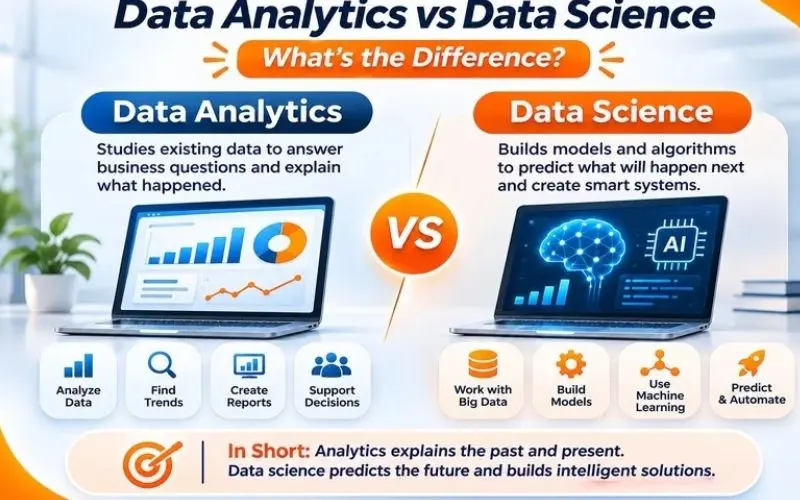
Data analytics studies existing data to answer business questions and explain what happened. Data science builds models and algorithms to predict what will happen next. Analytics focuses on clear insights today. Data science focuses on prediction, automation, and discovery.
Both fields use data to solve problems. They differ in goals, methods, tools, and the questions they answer. IBM offers a helpful overview of data science if you want another view.
This guide explains each field in plain words. You will see how they compare, where they overlap, and which one your business needs.
What Is Data Analytics?
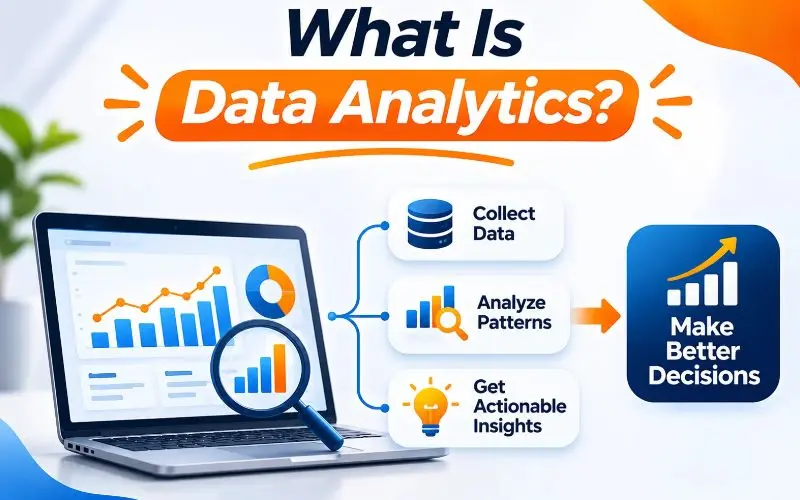
Data analytics is the process of examining data to find patterns and answer specific questions. Analysts clean data, study trends, and share clear findings. Leaders then use those findings to make better choices.
Most analytics work uses data analysis, statistical analysis, and data visualization. The goal is simple. Turn raw numbers into insight people can act on.
Our guide to data analytics covers the basics in more depth.
Types of Data Analytics
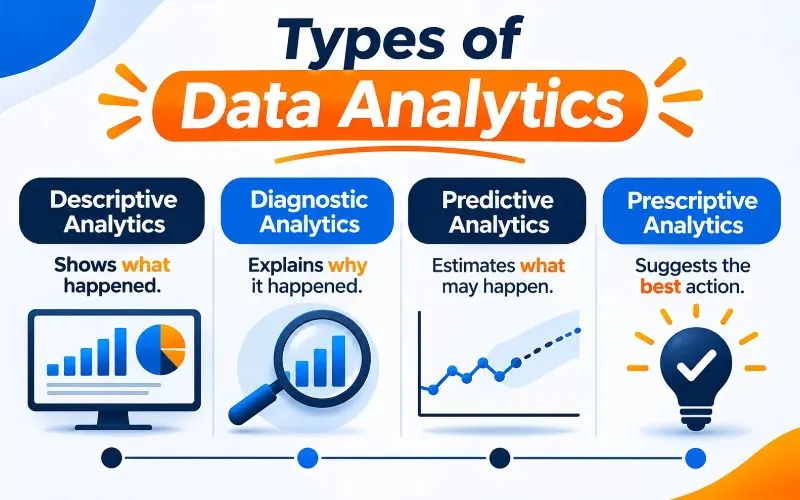
- Descriptive analytics: Shows what happened, such as last month’s sales.
- Diagnostic analytics: Explains why it happened, such as why sales dropped.
- Predictive analytics: Estimates what may happen, such as next quarter’s demand.
- Prescriptive analytics: Suggests the best action to take next.
What Data Analysts Do
- Pull data from databases using SQL.
- Clean and organize messy data sets.
- Run exploratory data analysis to spot trends and outliers.
- Build dashboards for business intelligence reporting.
- Share findings with managers and teams.
What Is Data Science?
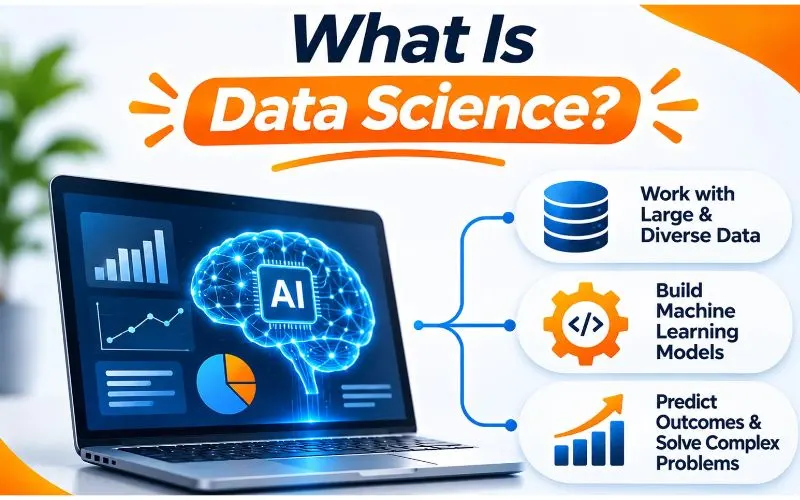
Data science is a broad field that uses math, coding, and machine learning to find deep insights. Data scientists build models that learn from data. These models predict outcomes and power smart apps.
Data science includes data mining, big data analytics, and data modeling. It often works with huge and messy data sets. Think of images, text, sensor streams, and logs.
Machine learning sits at the heart of data science. It lets computers learn patterns without fixed rules.
What Data Scientists Do
- Frame complex business problems as math problems.
- Collect and prepare large data sets.
- Build and test machine learning models.
- Deploy models into apps and products.
- Monitor model accuracy and improve it over time.
Data Analytics vs Data Science: Key Differences
The table below shows the main differences at a glance.
| Factor | Data Analytics | Data Science |
| Main goal | Explain past and present results | Predict future results and build smart systems |
| Core question | What happened, and why? | What will happen, and what should we do? |
| Scope | Focused and specific | Broad and exploratory |
| Data type | Mostly structured data | Structured and unstructured data |
| Methods | Statistics, reporting, dashboards | Machine learning, modeling, algorithms |
| Coding level | Light to moderate | Moderate to advanced |
| Output | Reports, dashboards, insights | Models, algorithms, data products |
| Typical users | Business and operations teams | Product, research, and engineering teams |
Goals and Questions
Analytics answers questions you already know to ask. For example, which product sold best last quarter? Data science answers harder questions. For example, which customers will leave next month?
Methods and Depth
Analytics leans on statistics, queries, and visuals. Data science adds machine learning and advanced data modeling. It also tests many ideas before it finds one that works.
Data and Scale
Analysts often work with clean, structured tables. Data scientists handle large and mixed data sets. They use tools built for big data analytics and distributed computing.
Tools Used in Data Analytics and Data Science
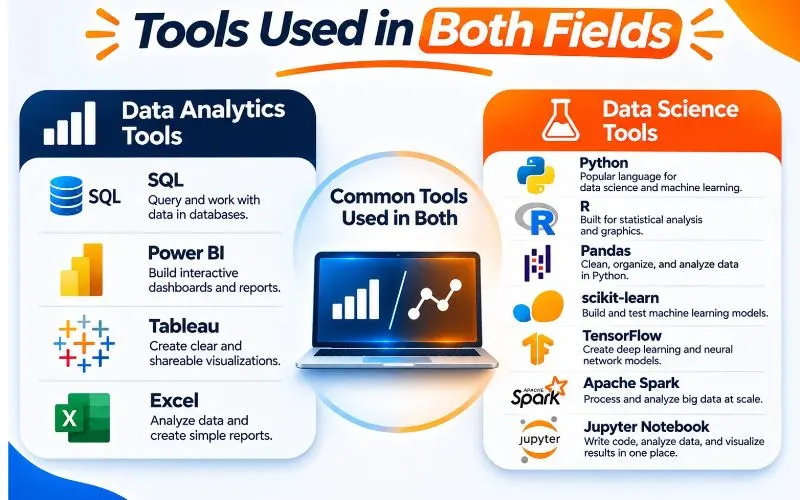
Tools shape daily work in both fields. Some tools overlap, and others are specialized.
Common Data Analytics Tools
- SQL: The standard language for querying relational databases.
- Microsoft Power BI: Builds interactive dashboards and business intelligence reports.
- Tableau: Turns data into clear, shareable visuals.
- Excel: Handles quick analysis and simple reports.
Common Data Science Tools
- Python: The most popular language for data science and machine learning.
- R Programming: A language built for statistical analysis and graphics.
- Pandas: A Python library for cleaning and shaping data.
- Scikit-learn: A Python library for classic machine learning models.
- TensorFlow: A framework for deep learning and neural networks.
- Apache Spark: An engine for processing big data across many machines.
- Jupyter Notebook: An interactive space to write code, run tests, and share results.
You do not need every tool. Pick the ones that match your goals and team skills.
Where Data Analytics and Data Science Overlap
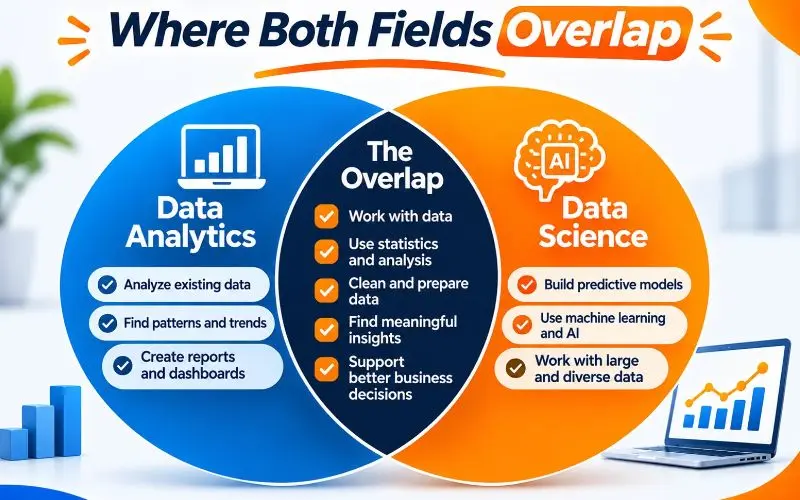
The two fields are not rivals. They share many skills and often work side by side.
- Both start with clear business questions.
- Both rely on clean, trusted data.
- Both use SQL, Python, and data visualization.
- Both need strong communication skills.
- Both support better, faster decisions.
Many teams move from analytics to data science as they grow. Analytics builds the foundation. Data science then adds prediction and automation.
Real World Examples
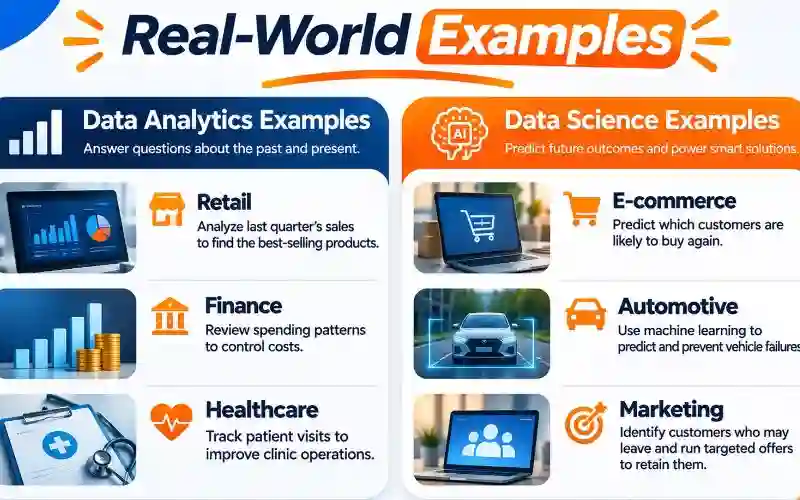
Examples make the difference easier to see.
- Retail analytics: A team builds a dashboard showing weekly sales by store. Managers spot weak locations fast.
- Retail data science: A model predicts which products each shopper will buy next. The site then shows personal offers.
- Healthcare analytics: A hospital reviews patient wait times by department. It adjusts staff schedules.
- Healthcare data science: A model flags patients at high risk of readmission. Doctors step in early.
- Finance analytics: A bank reports monthly loan defaults by region.
- Finance data science: A model scores every transaction for fraud in real time.
How Do Skills and Careers Compare?
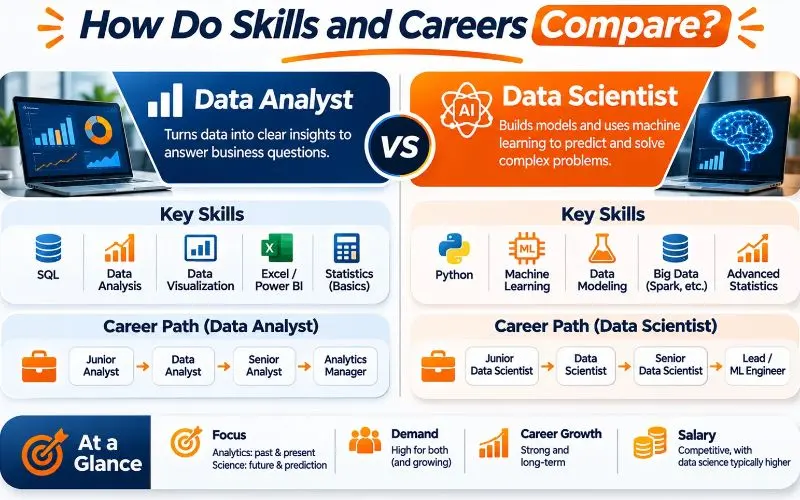
Both paths offer strong career growth. They require different strengths.
A data analyst needs SQL, spreadsheet skills, and data visualization. Business sense matters a lot. Analysts translate numbers into clear stories.
A data scientist needs strong math, coding, and machine learning skills. Python or R is a must. Scientists build and test models, so they need patience and curiosity.
If you enjoy business questions and clear reports, analytics may fit you. If you love math, coding, and experiments, data science may suit you better.
Which One Does Your Business Need?
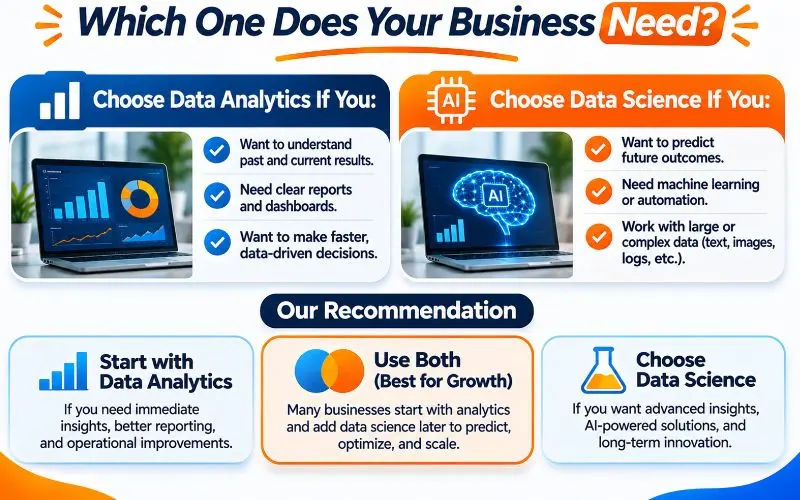
Your choice depends on your goals, data, and team.
Choose data analytics if you want to:
- Understand current performance.
- Build dashboards and regular reports.
- Find trends in sales, costs, or customer behavior.
- Make faster decisions with trusted numbers.
Choose data science if you want to:
- Predict future outcomes with machine learning.
- Automate decisions, such as fraud checks or recommendations.
- Work with text, images, or sensor data.
- Build smart products and features.
Most growing companies need both. Start with analytics to build trust in your data. Add data science once your data is clean and well organized.
Why Data Quality and Pipelines Matter for Both
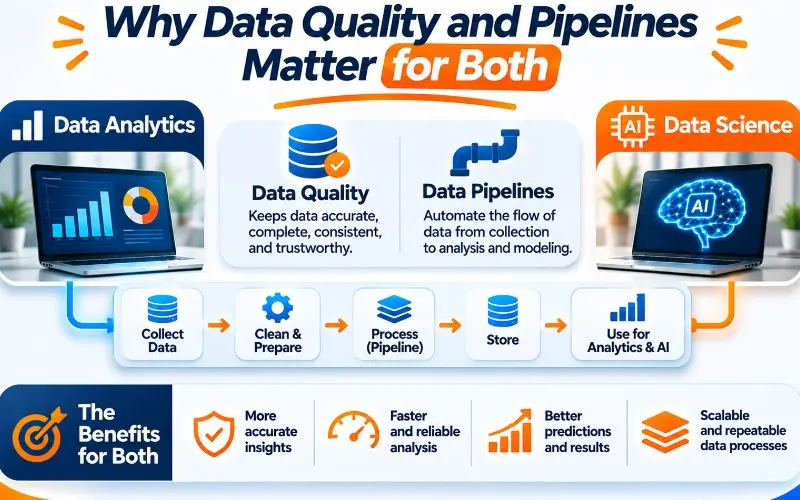
Neither field works well with bad data. Dirty inputs lead to wrong insights and weak models. Strong data quality management keeps your data accurate and consistent.
Reliable pipelines matter too. They move data from source systems into storage and tools. Explore more practical guides on our data and cloud blog to learn how to build them.
How Wisdom Tech Cloud Services Can Help
Great analytics and data science need the right data foundation. Wisdom Tech Cloud Services helps businesses organize, connect, and use data with confidence. Explore our data and cloud services to see how we can support your analytics and AI goals.
Frequently Asked Questions
What is the main difference between data analytics and data science?
Data analytics explains what happened using existing data. Data science predicts what will happen and builds models that learn from data.
Is data science harder than data analytics?
Data science usually needs deeper math, coding, and machine learning skills. Analytics is easier to start with. Both need practice and strong problem-solving.
Which pays more, data analytics or data science?
Data science roles often pay more because they need advanced skills. Pay still varies by country, company, and experience level.
Do data analysts use machine learning?
Sometimes, but not often. Analysts focus on reporting and insight. Predictive analytics may use simple models, while advanced machine learning belongs to data scientists.
Which tools should beginners learn first?
Start with SQL, Excel, and a tool like Power BI or Tableau. Then learn Python with Pandas. Move to Scikit-learn when you are ready.
Can a data analyst become a data scientist?
Yes, many do. Learn Python, statistics, and machine learning step by step. Build small projects to show your skills.
Does a business need both data analytics and data science?
Most growing businesses benefit from both. Analytics gives clear insight today. Data science adds prediction and automation as your data matures.